
Divorce and Custody: Coordinating Your Legal Strategy
Our Blog
Divorce and Custody: Coordinating Your Legal Strategy

Divorce and custody decisions shape your family’s future, and the choices you make now will affect everyone involved for years to come. The path forward depends on understanding your options-from settlement discussions to court proceedings-and building a strategy that protects your interests and your children’s wellbeing.
We at Harnage Law PLLC help families navigate these complex decisions with clarity and confidence. This guide walks you through the legal landscape so you can move forward with purpose.
Understanding Your Legal Options in Divorce
Uncontested vs. Contested Paths
Divorce follows different routes, and the direction you choose-settlement, mediation, or court-fundamentally changes your timeline, costs, and outcomes. Understanding these paths before filing matters because switching strategies midway costs thousands in additional attorney fees and extends emotional strain.
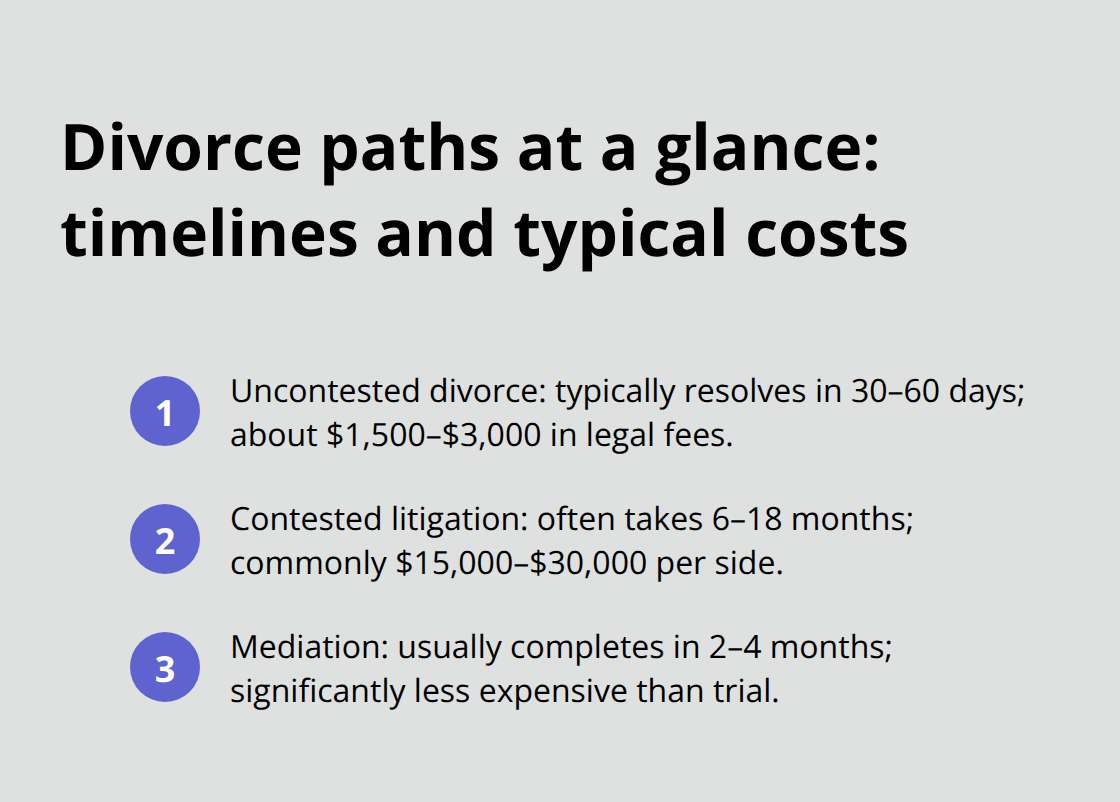
Uncontested divorces move fast. When both spouses agree on property division, child custody, and support, many states allow filing without court hearings. Texas offers uncontested divorce kits that simplify the process for couples without minor children, while the Divorces with Children kit coordinates custody, visitation, and child support in one package. These streamlined approaches typically resolve in 30 to 60 days, compared to 6 to 18 months for contested cases. The cost difference is stark: uncontested divorces average $1,500 to $3,000 in legal fees, while contested litigation often exceeds $15,000 to $30,000 per side.
Contested divorces happen when spouses disagree on major issues-asset division, custody arrangements, or support amounts. Courts then decide these matters through litigation. This path demands extensive discovery, depositions, and document production. You’ll spend months gathering financial records, tax returns, and evidence supporting your position. Courts prioritize the child’s best interests when custody disputes arise, evaluating factors like each parent’s involvement in daily life, stability of the home environment, and any history of abuse or substance misuse.
Mediation and Collaborative Approaches
Mediation and collaborative divorce sit between uncontested and fully contested paths. A neutral mediator facilitates discussions where both spouses work toward mutual agreement without court intervention. This approach costs significantly less than litigation and typically takes 2 to 4 months. Studies show mediated divorces have higher compliance rates because both parties actively shaped the outcome. Georgia courts often encourage mediation before trial, and many judges won’t hear contested cases without evidence of a mediation attempt.
Collaborative divorce involves both attorneys, plus financial advisors and child specialists when needed, working as a team toward settlement. This model costs more than mediation alone but far less than trial, and it preserves better relationships between co-parents-a significant advantage when ongoing custody coordination is required.
Matching Strategy to Your Situation
Your strategy should match your circumstances. If you have minor children and custody disagreements exist, litigation often takes longer because courts conduct detailed evaluations. If assets are complex or one spouse hides financial information, you’ll need formal discovery tools-interrogatories, document requests, and depositions-to uncover the full picture. A forensic accountant becomes necessary when business ownership or substantial hidden wealth is suspected.
The timing of your filing affects taxes, health insurance eligibility, and support duration, so coordinating with legal and financial professionals optimizes your approach. Each path carries distinct advantages and trade-offs, and the right choice depends on your specific circumstances, your children’s needs, and your financial reality. Once you understand which direction fits your situation, the next step involves examining what courts actually consider when custody is contested.
Custody Arrangements and What Courts Consider
Custody splits into two distinct components that courts handle separately, and understanding this division changes how you build your strategy. Physical custody determines where your child lives and how much time they spend with each parent. Legal custody controls who makes major decisions about education, medical care, religion, and extracurricular activities. Courts do not automatically award both to one parent. A parent can have sole physical custody while both parents share legal custody, or vice versa. This separation matters because it affects your daily parenting schedule, your involvement in critical decisions, and ultimately your child support obligations.
Physical Custody Arrangements Drive Your Schedule
Physical custody outcomes fall into distinct categories. Sole physical custody means your child lives primarily with one parent, while the other parent receives a defined visitation schedule. Joint physical custody requires the child to spend significant time with both parents, commonly alternating weeks or following a 2-2-3 rotation where each parent has two days, then the other parent has two days, then one parent has three consecutive days. Courts increasingly favor joint physical custody when both parents demonstrate stability and willingness to cooperate, based on research showing children maintain stronger relationships with both parents under these arrangements. However, sole physical custody remains appropriate when one parent’s work schedule, substance abuse history, or documented neglect makes equal time unfeasible or unsafe. The distance between parents’ homes directly impacts feasibility. If you live 200 miles apart, a weekly alternating schedule becomes impractical, and courts typically award primary physical custody to the parent closest to the child’s school and activities while granting the other parent extended weekend and summer visitation.
Legal Custody and Decision-Making Authority
Legal custody determines who controls choices about your child’s future. Joint legal custody requires both parents to communicate and agree on major decisions. This arrangement works only when parents can set aside conflict and prioritize the child’s interests. If disagreements arise over schooling, medical treatment, or religious upbringing, courts may need to intervene or mediation becomes necessary. Sole legal custody gives one parent exclusive authority to make these decisions, typically awarded when the other parent has abandoned the child, poses a safety risk through abuse or severe substance misuse, or demonstrates persistent inability to cooperate. Courts view sole legal custody as limiting the child’s relationship with the non-custodial parent, so judges grant it only when joint custody genuinely threatens the child’s wellbeing. The practical reality is that sole legal custody simplifies decision-making but can create resentment and compliance problems if the non-custodial parent feels excluded from their child’s life.
What Courts Actually Evaluate
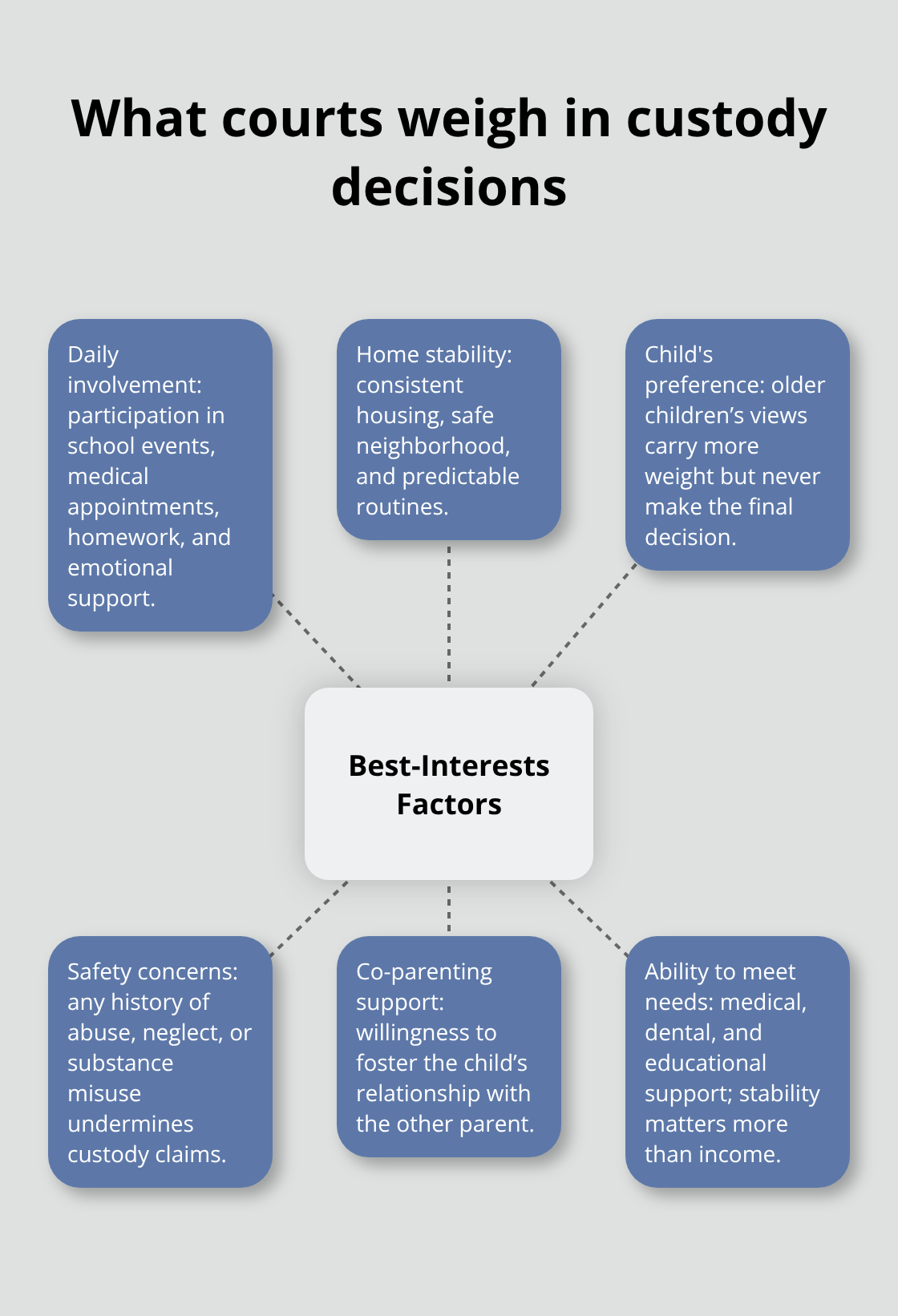
Courts apply a best-interests standard when custody disputes arise, but this standard encompasses specific factors they weigh consistently. Your involvement in daily parenting matters enormously. Courts examine whether you attend school events, manage medical appointments, handle homework, and provide emotional support. A parent who works 50 hours weekly but actively participates in the child’s life typically ranks higher than an uninvolved parent with flexible hours. Stability in the home environment carries substantial weight. Courts want assurance that the child will have consistent housing, a safe neighborhood, and predictable routines. If you have recently moved multiple times or your living situation is unstable, this weakens your custody position. The child’s age influences how much their preferences matter. A 14-year-old’s stated preference to live with one parent carries more weight than a 6-year-old’s preference, though courts never allow children to make the final decision regardless of age.
Any history of abuse, neglect, or substance misuse becomes disqualifying for primary custody. Courts access criminal records, prior protective orders, and testimony from witnesses. A single DUI conviction does not automatically eliminate custody, but a pattern of alcohol abuse or drug use directly threatens your credibility. Your willingness to support the child’s relationship with the other parent significantly influences outcomes. Courts favor parents who encourage ongoing contact and avoid parental alienation. If you consistently prevent visitation, speak negatively about the other parent, or discourage the child from maintaining that relationship, judges view this as prioritizing your interests over the child’s wellbeing. The court also considers each parent’s ability to meet the child’s basic needs, provide medical and dental care, and support educational development. Income matters less than stability and demonstrated commitment.
Building a Parenting Plan That Holds Up
A detailed parenting plan functions as your roadmap and protects your interests during disputes. Include specific parenting time schedules with exact pickup and drop-off times, locations, and responsibility for transportation. Vague language like “reasonable visitation” invites conflict. Courts favor detailed plans because they reduce ambiguity and the likelihood of future disputes. Address holiday and summer schedules explicitly. Many custody conflicts arise during holidays when both parents want the child present. If your plan specifies that you have Thanksgiving in odd years and Christmas Eve in even years, no disputes occur. Summer vacation requires equally detailed coordination. Decide whether school breaks alternate, whether each parent receives a continuous two-week block, or whether the schedule follows a different pattern. Include methods of communication between parents. Specify whether you will use a shared calendar app, text messaging, or email for coordinating schedules and discussing the child’s needs. Define how major decisions get made if you share legal custody. Will you discuss medical choices before appointments, or will each parent make decisions independently within certain categories? Address potential relocation. If either parent might move out of state or significantly farther away, your plan should specify how this affects custody and whether modifications require court approval. Courts use the Uniform Child Custody Jurisdiction and Enforcement Act, which restricts relocating with a child without the other parent’s consent or a court order.
Documenting Your Involvement and Preparing for Evaluation
Document your parenting involvement consistently. Maintain records of school events you attend, medical appointments you schedule, and activities you support. Take photos and keep email confirmations. If custody becomes contested, this documentation proves your level of involvement. Courts also consider what a Guardian ad Litem or custody evaluator observes during home visits and interviews. Prepare your home for potential evaluation by ensuring adequate sleeping arrangements for the child, safe storage of medications and hazardous materials, and a calm environment free of evidence of substance abuse or domestic violence. The strength of your custody strategy depends on aligning your proposed schedule with your actual capacity to follow it, documenting your involvement in the child’s life, and demonstrating that your arrangement serves the child’s interests rather than your convenience. Once you have established a solid foundation for your custody position, the next critical step involves coordinating these arrangements with professional legal guidance to ensure your strategy protects both your rights and your children’s wellbeing.
Building Your Strategy with Professional Guidance
Organize Your Financial Records Before Meeting Your Attorney
Gathering the right documentation before meeting with an attorney fundamentally changes the quality of advice you receive and the fees you pay. Courts require full financial disclosure, and incomplete paperwork forces your attorney to spend billable hours tracking down missing pieces. Start by collecting three years of tax returns, recent pay stubs covering the last two months, bank and credit card statements from the past 12 months, and retirement account statements showing current balances and beneficiary designations. For mortgage or loan documentation, obtain the promissory notes and current statements showing principal balances. If either spouse owns a business, gather corporate tax returns, profit-and-loss statements, and ownership documentation. Insurance policies-life, health, disability, and property-must be included because these assets and obligations directly affect property division and support calculations.
Create a spreadsheet listing all assets with estimated values and all debts with current balances. This single document saves your attorney hours of investigation and reduces legal fees substantially. The American Bar Association found that clients who arrived at consultations with organized financial records reduced their initial consultation time by 40 percent and lowered overall legal costs by 15 to 20 percent compared to clients who brought disorganized materials.

Document Your Parenting Involvement and Protect Your Digital Security
For custody cases, document your parenting involvement through school records, medical appointment confirmations, photographs of activities you attend together, and email chains showing your involvement in educational decisions. If the other parent has engaged in concerning behavior, gather evidence immediately: text messages showing inappropriate communication, photographs documenting unsafe living conditions, or records from police reports if domestic violence occurred.
Digital security matters enormously. Change all passwords to personal accounts before filing, create separate email and financial accounts, and back up important documents to secure cloud storage. Pull your credit report from all three bureaus through annualcreditreport.com to identify accounts you did not open or debts that may have been hidden from you.
Communicate Your Priorities and Expectations Clearly
Coordinating with your attorney requires clear communication about your priorities and realistic expectations about timelines and costs. Tell your attorney upfront whether you want to pursue settlement or you are prepared for trial, because this shapes which discovery tools to use and how aggressively to pursue evidence. If custody is contested, explain your parenting involvement and your concerns about the other parent’s fitness. Provide your attorney with the detailed parenting plan you developed earlier, along with documentation of your involvement.
Ask your attorney to explain the specific factors your state’s courts apply when evaluating custody, because these factors vary by jurisdiction. In Florida, courts weigh the length and nature of each parent’s relationship with the child, each parent’s involvement in parenting, the child’s adjustment to home and school, and the stability of each home environment. Georgia courts apply similar factors but also specifically consider whether either parent has engaged in parental alienation or domestic violence. Understanding these jurisdiction-specific factors allows you to strengthen your position in areas where courts place the most weight.
Understand Realistic Timelines and Costs for Your Case
Request a realistic timeline for your case type. Uncontested divorces with no custody disputes typically conclude in 30 to 90 days. Contested custody cases average 6 to 12 months from filing to final judgment, though cases involving allegations of abuse or substance misuse can extend 18 to 24 months. Ask your attorney about the total estimated cost for your specific situation, including attorney fees, court filing fees typically ranging from $300 to $500, and potential costs for expert witnesses if custody evaluations or forensic accounting becomes necessary.
Discuss settlement authority. If you want to pursue mediation or collaborative divorce, tell your attorney this early so they can coordinate with the other side’s counsel. If litigation appears inevitable, ask whether your attorney recommends hiring a forensic accountant to uncover hidden assets or whether a custody evaluator should be requested. These professionals add $5,000 to $15,000 to your case costs but become essential when asset concealment or parental fitness concerns exist.
Final Thoughts
Divorce and custody decisions require coordination across multiple fronts: understanding your legal options, building a realistic custody strategy, and working with qualified legal guidance to protect your interests and your children’s wellbeing. The path you choose at the beginning shapes everything that follows, from timelines and costs to long-term family relationships. Uncontested settlements resolve quickly and affordably, while contested litigation demands thorough preparation and realistic expectations about duration and expense.
Your custody strategy must align with what courts actually evaluate: your demonstrated involvement in daily parenting, the stability of your home environment, your willingness to support the child’s relationship with the other parent, and any documented concerns about the other parent’s fitness. A detailed parenting plan with specific schedules, holiday arrangements, and decision-making protocols prevents future disputes and shows courts you have thought through your child’s needs. Organizing your financial records, documenting your parenting involvement, and communicating clearly with your attorney about priorities and expectations dramatically improves outcomes while reducing legal costs.
The strength of your position depends on preparation before filing and consistent coordination throughout the process. We at Harnage Law PLLC help families in Melbourne, Florida navigate divorce and custody matters with personalized attention and strategic counsel. Contact us to discuss your specific circumstances and develop a strategy that serves your family’s interests.